


Unique Business Card Design Services for Modern Businesses
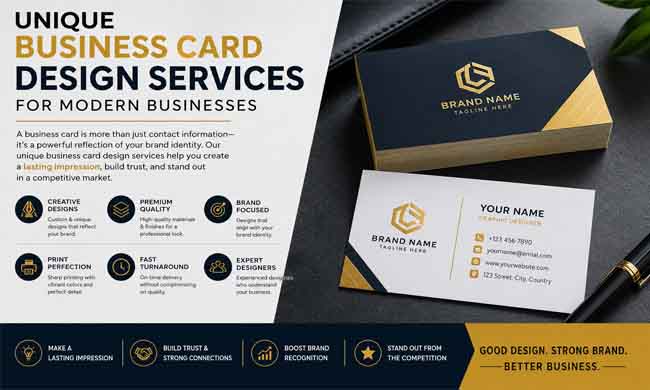
Unique Business Card Design Services for Modern Businesses
In a world where first impressions are formed within seconds, a business card remains one of the most powerful yet underestimated tools in professional branding. Despite the rise of digital communication, a well-crafted physical card continues to leave a lasting impression that digital exchanges simply cannot replicate. Businesses looking for Professional Business Card Design Services understand that a premium business card is more than contact information it is a reflection of brand identity and credibility. This comprehensive guide explores why unique business card design matters, what elements define excellence, and how modern businesses can strengthen their professional image through custom designs.
The Enduring Power of a Physical First Impression
In an increasingly digital economy, it may seem counterintuitive that a small paper card still holds significant value. Yet research consistently shows that tangible items create stronger memory retention than digital ones. When a potential client or partner receives a beautifully designed card, they physically hold a piece of your brand identity in their hands. This tactile experience creates a psychological connection that a simple email signature or LinkedIn profile cannot match.
A card exchanged during a meeting, conference, or casual encounter often becomes the deciding factor in whether someone remembers a business days or weeks later. This makes premium card design a critical touchpoint in the overall customer journey, one that deserves the same level of strategic thought as a website or logo.
Why Generic Templates No Longer Work ?
The market is flooded with generic, template-based designs that fail to differentiate one business from another. When potential clients see the same recycled layouts repeated across countless industries, the impact of a business card diminishes significantly. Standing out requires moving beyond pre-made templates toward custom-tailored designs that reflect the specific personality, values, and positioning of a brand.
Businesses that settle for generic designs risk blending into the background, appearing indistinguishable from competitors. In contrast, companies that invest in original, thoughtfully crafted designs immediately signal professionalism, attention to detail, and a commitment to quality qualities that translate directly into how clients perceive the business as a whole.
Elements That Define Exceptional Business Card Design
Creating a truly memorable card requires mastery over several interconnected design elements. Typography plays a foundational role, as the choice of font directly communicates tone whether a business wants to appear formal, creative, minimalist, or bold. Poor typography choices can undermine even the most creative layout, while well-selected fonts elevate the entire design.
Color psychology is equally critical. Colors evoke emotional responses and associations that influence how a brand is perceived. A financial consultancy might lean toward deep blues and greys to convey trust and stability, while a creative agency might embrace vibrant, unconventional palettes to communicate innovation and energy. Understanding these psychological triggers allows designers to craft cards that align precisely with a brand's intended perception.
Material selection has also become a defining factor in modern card design. Textured papers, matte or glossy finishes, embossed lettering, foil stamping, and even unconventional materials like wood or metal can transform a simple card into a memorable artifact. These tactile enhancements add a layer of sophistication that immediately distinguishes a business from competitors relying on standard cardstock.
The Role of Layout and Information Hierarchy
Beyond aesthetics, functional design plays a crucial role in a card's effectiveness. A cluttered card overwhelms recipients, while an overly minimalist one may fail to communicate essential information. Striking the right balance requires careful attention to information hierarchy ensuring that the most important details, such as the business name and primary contact method, are immediately visible, while secondary information remains accessible without crowding the design.
White space is often underestimated but plays a vital role in creating a sense of sophistication and clarity. Cards that embrace negative space effectively tend to feel more premium and intentional, whereas overcrowded designs can appear amateurish regardless of how expensive the materials may be.
Aligning Card Design with Overall Brand Identity
A business card should never exist in isolation from the broader brand ecosystem. It must seamlessly integrate with existing brand guidelines, including logo usage, color schemes, and typography established across other marketing materials. This consistency reinforces brand recognition and ensures that every touchpoint from the website to the business card communicates a unified, cohesive identity.
Professional design services excel at this integration, taking the time to understand a brand's existing visual language before crafting a card that complements rather than contradicts established branding. This holistic approach ensures that the card feels like a natural extension of the business rather than a disconnected afterthought.
Customization as a Competitive Differentiator
Modern businesses increasingly recognize the value of personalization, and business cards are no exception. Custom shapes, die-cut designs, unconventional sizing, and interactive elements such as QR codes have transformed what was once a static piece of paper into a dynamic branding tool. These creative enhancements not only capture attention but also encourage recipients to hold onto the card rather than discarding it.
Some businesses have even begun incorporating augmented reality elements, where scanning a card triggers a digital experience such as a portfolio showcase or video introduction. While not necessary for every industry, these innovations demonstrate how far card design has evolved beyond its traditional boundaries, offering businesses new avenues for creative brand differentiation.
The Value of Professional Design Expertise
While it may be tempting for businesses to design cards independently using free online tools, the results often lack the polish and strategic thinking that professional designers bring to the table. Experienced designers understand the nuanced interplay between color theory, typography, spacing, and material selection in ways that generic tools cannot replicate. Businesses seeking Affordable Business Card Design Solutions often discover that investing in expert designers delivers greater long-term value than relying on basic templates or automated design platforms.
Professional design services also bring an outside perspective, helping businesses avoid common pitfalls such as overcrowded layouts, poor contrast, or misaligned branding. This objective viewpoint ensures that the final product not only looks impressive but also functions effectively as a marketing tool that accurately represents the business.
Moreover, professional designers stay attuned to evolving design trends, ensuring that a business card feels contemporary rather than outdated. This ongoing awareness of industry shifts allows businesses to maintain a fresh, relevant image without needing to constantly research design trends themselves.
Industry-Specific Design Considerations
Different industries demand different design approaches. A law firm or financial institution typically benefits from clean, conservative designs that emphasize trust and professionalism, often utilizing subtle color palettes and traditional typography. In contrast, creative industries such as photography, design, or entertainment have far more freedom to experiment with bold colors, unconventional layouts, and artistic flourishes that showcase creativity.
Understanding these industry-specific expectations is essential for effective design. A card that feels appropriate for a tech startup might seem out of place for a medical practice, and vice versa. Skilled designers tailor their approach based on industry norms while still finding ways to inject uniqueness that helps a business stand apart from direct competitors.
Sustainability and Eco-Conscious Design Trends
As environmental awareness continues to grow among consumers, sustainable design choices have become increasingly important in card production. Businesses are now exploring recycled paper stocks, soy-based inks, and biodegradable materials as alternatives to traditional printing methods. This shift not only reduces environmental impact but also communicates a brand's values to environmentally conscious clients and partners.
Incorporating sustainability into card design can serve as a meaningful differentiator, particularly for businesses operating in industries where environmental responsibility resonates strongly with their target audience. This approach demonstrates that thoughtful design extends beyond aesthetics into broader corporate values.
Measuring the Impact of Effective Card Design
While business cards may seem like a minor marketing expense, their impact on networking effectiveness and brand perception is measurable in tangible ways. A well-designed card increases the likelihood of follow-up contact, enhances perceived professionalism, and often becomes a conversation starter in networking settings.
Businesses that track referral sources or ask new clients how they discovered the company often find that memorable business cards play a surprisingly significant role in initial engagement. This reinforces the idea that design investment in seemingly small marketing materials can yield outsized returns in relationship building and brand recall.
The Long-Term Return on Design Investment
Choosing to invest in unique, professionally crafted business cards is ultimately an investment in long-term brand equity. While the upfront cost of premium design and materials may exceed that of generic alternatives, the return manifests through stronger client relationships, increased referrals, and a more polished professional image that supports broader business growth.
Businesses that prioritize this level of corporate identity development signal to clients and partners that they take every aspect of their operations seriously, including the smallest details. This attention to detail often translates into greater trust, as clients naturally assume that a business meticulous about its branding will demonstrate similar care in delivering products or services.
Conclusion
In a business landscape increasingly dominated by digital interactions, the humble business card retains surprising power as a tool for making memorable, lasting impressions. Businesses that move beyond generic templates and invest in thoughtfully designed, Creative Business Card Design for Modern Businesses position themselves as serious, detail-oriented organizations worthy of trust and continued engagement.
By carefully considering typography, color psychology, material selection, brand alignment, and strategic customization, companies can transform a simple networking tool into a powerful extension of their overall identity. A professionally designed business card is more than a printed piece of paper it is a reflection of a company's values, professionalism, and commitment to excellence.
Whether you are a startup, a growing enterprise, or an established corporation, investing in high-quality business card design creates stronger first impressions, improves brand recognition, and helps build long-term business relationships. With the right combination of creativity, strategy, and premium printing, your business card will continue promoting your brand long after the initial handshake, making it one of the most valuable marketing assets for modern businesses.
Comments